 Confirmly
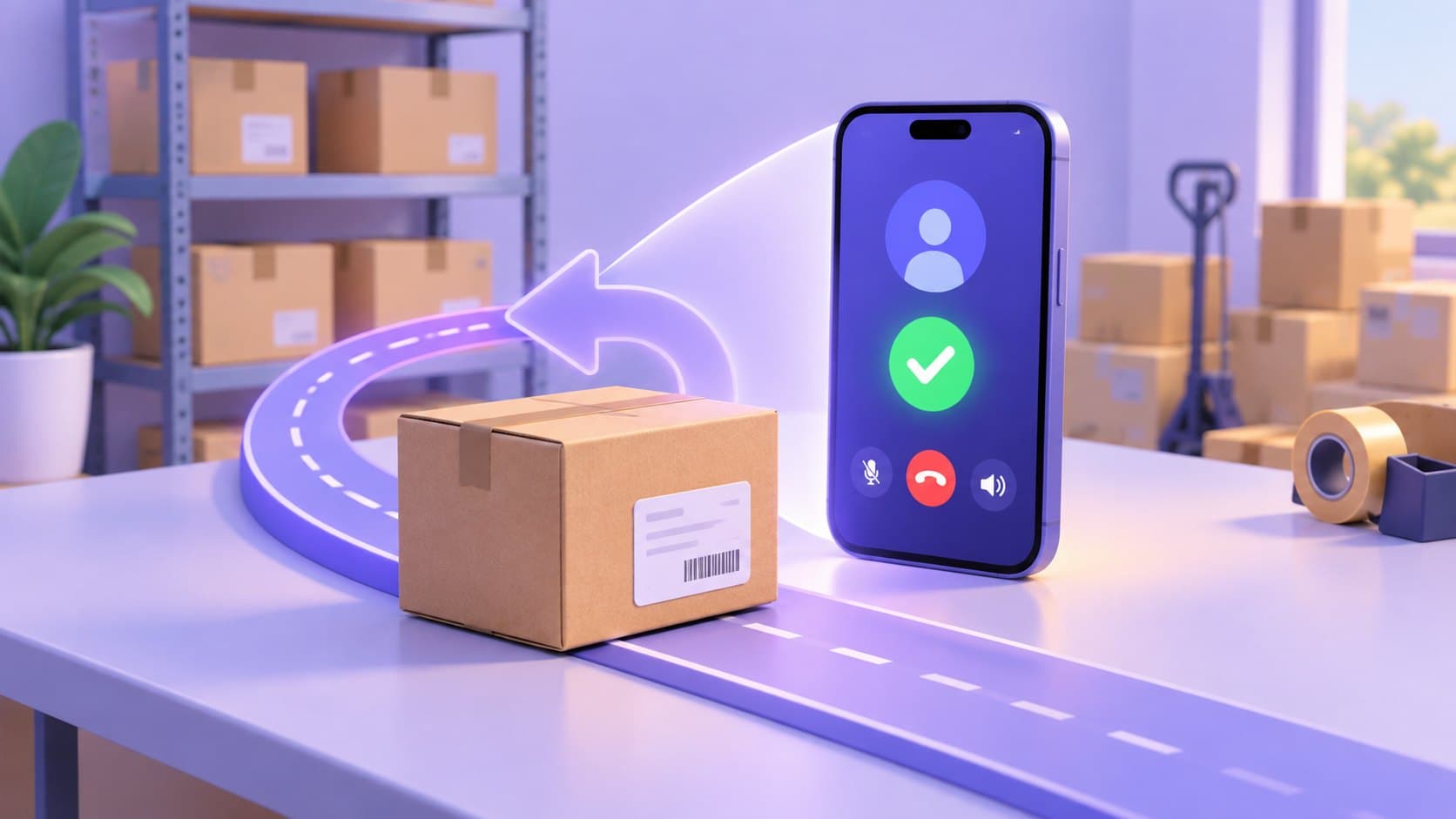
You packed the order, paid the courier and watched the tracking page for three days. Then the status changed to RTO initiated.
If you sell cash on delivery in India, you know that feeling. And you know the worst part: you'll pay to ship the parcel back as well.
Most advice on how to reduce RTO treats it as a delivery problem. Switch couriers, add delivery attempts, block bad pincodes. Those help at the edges. But most COD orders that come back were in trouble before they were packed. The customer had already changed their mind, typed half an address, or never meant to buy.
So the best place to reduce RTO on COD orders isn't the doorstep. It's the few hours between checkout and dispatch.
This guide covers where your RTO really comes from, what each return costs you, and seven fixes that work, starting with the ones that cost nothing.
Your RTO problem starts before the parcel ships
Open the non-delivery reports (NDRs) for last month's returned COD orders. Couriers log a reason for every failed delivery, and the same few show up again and again.
Now ask one question about each: could you have known this before shipping?
| What the courier logged | What usually happened | Could you have caught it before shipping? |
|---|---|---|
| Customer refused delivery | Changed their mind, didn't expect the total, or bought it elsewhere | Yes, with a call before dispatch |
| Address incomplete or incorrect | Missing flat number, wrong building, no landmark | Yes, by reading the address back |
| Customer not available | At work, travelling, or out when the courier came | Mostly, by asking when they'll be home |
| Phone not reachable | Wrong number or a phone that's always off | Yes, a call that never connects is a warning |
| Fake or prank booking | Nobody meant to buy | Yes, nobody confirms a fake order |
That's the pattern. Very little of it is about the courier. It's about information you didn't have when you shipped: does the customer still want this, where exactly does it go, and when will someone be there?
What one returned COD parcel really costs you
RTO feels small one parcel at a time. It isn't.
Here's a simple example for one returned COD order:
| Cost | Example |
|---|---|
| Packaging | ₹40 |
| Shipping out | ₹70 |
| Return shipping | ₹70 |
| Total, before anything else | ₹180 |
That ₹180 doesn't include stock that comes back damaged, the days that stock sits in transit instead of on sale, or the profit on a sale you didn't make.
Now scale it. A store shipping 3,000 COD orders a month with a 30% RTO rate gets 900 parcels back. At ₹180 each, that's ₹1,62,000 a month in logistics alone.
How to reduce RTO on COD orders: 7 fixes that work
1. Call every COD order before you pack it
A confirmation SMS or WhatsApp message is easy to ignore, and a customer can't tell a message that the flat number is wrong or they'd rather have it on Saturday.
A short call can. It catches the change of mind, the fake order and the wrong address while fixing them still costs you nothing.
Timing matters. Call soon after checkout, while the customer still remembers what they bought and why. Call the next afternoon and you're reaching someone who has half forgotten the order.
2. Read the address back. Don't ask "is it correct?"
Ask a customer "is your address correct?" and almost everyone says yes without listening.
Read it out instead: "Flat 401, Shanti Residency, near the petrol pump, 411038." Now they're listening, and "actually, it's 402" comes out immediately.
Check the four things couriers need most:
- Flat or house number, and the building name
- Street and area
- A landmark the delivery person can ask for
- The pincode
3. Ask when they'll actually be home
A parcel that arrives while the customer is at work is a parcel that's likely to come back as "customer not available".
It takes one question: "When is a good time for delivery?" Note the answer, like "after 6 pm" or "not before Tuesday", on the order so your team can plan around it.
4. Talk to customers in their own language
A customer in Pune who's more comfortable in Marathi will give you clearer answers in Marathi. Force the call into a language they only half follow, and you get polite yeses that turn into refusals at the door.
If your customers are spread across India, your confirmation calls need to be too.
5. Don't cancel customers who miss your call. Don't ship blind either.
People miss calls. It doesn't mean they don't want the order.
A simple retry plan works well:
- Wait a little after checkout before the first call.
- Try up to 3 times, a couple of hours apart.
- If you still can't reach them, send the order for review instead of shipping it.
Someone on your team can then decide whether to hold it, try another way, or cancel.
6. Treat a cancellation on the call as a win
It feels bad when a customer cancels on a confirmation call. It shouldn't. You just saved ₹180 or more on a parcel that was coming back anyway.
Ask why before you hang up. The answers are some of the most useful data your store has:
- "I ordered by mistake" suggests your checkout is too easy to finish by accident
- "Delivery is too slow" points to your delivery promise
- "I found it cheaper" is a pricing signal
- "I didn't know the total" means shipping or COD fees are a surprise
7. Make prepaid the easier choice
Every order that switches to prepaid is one that can't become a COD return. A small prepaid discount or free shipping on prepaid orders is common. Test what your margins can afford, and keep COD available for the customers who need it.
Know which fix is working
Check your RTO rate once a month, and split it three ways:
- By reason: refused, not available, wrong address, unreachable
- By pincode or city: some areas may need stricter confirmation
- By product: an item with high RTO may have a misleading listing or photos
If "refused" drops but "not available" doesn't, you know to push harder on delivery timing. That's how you keep reducing RTO month after month.
Why these fixes break down when you do them by hand
Every fix above is simple. Doing them on every COD order, every day, is not.
- A calling team gets through the morning queue, then a sale day triples your orders. Night and weekend orders wait. Callers speak one or two languages. Notes end up in a spreadsheet, not on the order.
- A press-1 IVR calls everyone, but it can't hear "the flat number is wrong" or "deliver after 6". Customers who say "yes, send it" instead of pressing 1 get marked as no response.
We compare both with AI calls in IVR vs AI calls for COD order confirmation.
What this looks like with Confirmly
We built Confirmly to run these fixes on every COD order automatically. Here's what happens to one order:
- Priya places a COD order on your Shopify store in the afternoon.
- Confirmly calls her after the wait you set, in your default language, Hindi. It says up front that it's your store's automated assistant.
- It reads back her order, the items and the COD total.
- It reads back her address. She says the flat number is 402, not 401. Confirmly captures the correction and sends it to you for approval, or updates it directly if you've switched on auto-update.
- It asks about delivery. She wants it after 6 pm, and that's noted on the order.
- The result lands on the Shopify order: your tag, your status and a timeline note, with the call recording and transcript.
If Priya had answered in Marathi, the call would have switched to Marathi. If she hadn't picked up, Confirmly would try again up to 3 times, hours apart, then put the order in your Needs attention queue.
You pay only for connected talk time, about two minutes for a typical call, with no monthly fee.
The short version
- Most RTO on COD orders is decided before the parcel ships.
- One return can easily cost ₹180 or more before damaged stock and lost profit.
- Call every COD order, read the address back, ask about delivery timing, and speak the customer's language.
- Retry customers who miss the call, and review rather than ship anything unconfirmed.
- Track RTO by reason, pincode and product so you know which fix is working.
Want the exact questions to ask on the call? Use our COD order confirmation call checklist.

